Trulia Rent Apartments & Homes
- 4.7
- Rating
- 5.00M
- Installs
- Free
- Price

 Analysis by App-foxy
Finding a place to live is rarely a single-search task. I usually begin with a broad idea of the neighborhood, then narrow the search by rent, space, commute, and the small details that decide whether a home will actually work day to day. Trulia Rent Apartments & Homes fits well into that process because it focuses on apartments, houses, and individual rooms for rent rather than trying to be a general-purpose housing tool for every possible decision.
After spending time with it, I see the app as a practical starting point for renters who want to compare possibilities from a phone. It is free, aimed at everyone, and developed by Trulia. The app has built a substantial audience, with over 5 million installs, a 4.7 average from around 99 thousand ratings, and roughly 20 thousand written reviews. Those figures do not replace personal testing, but they do suggest that it has become a familiar option for people browsing the rental market.
How I use Trulia Rent from the first search to a realistic shortlist
My preferred workflow starts with a location rather than a perfect description of the home. I enter a city, neighborhood, or area I am considering and look at the available rental results before applying too many restrictions. This first pass matters because it shows whether my expectations match the local market. If I immediately set every preference, I can hide useful alternatives and get a distorted impression of what is available.
You May Also Like

 Pandora - Music & Podcasts
Pandora’s Music Is Easy to Start, but Harder to Recover
Pandora’s strength is its low-effort path from a seed to a station. Its weak spot is how much confidence it asks you to place in connection, setup, and quiet recovery.

 8 Ball Pool
 Is Built on Rivalries, Rematches, and Routine
A close look at the rivalries, rematches, shared routines, and unanswered safety questions that turn a quick pool match into a persistent mobile community.

 Samsung Music
’s Quiet Strength Is Playing What You Already Own
Its reach comes less from spectacle than from dependable access to a personal library. That simplicity is both the app’s strongest retention engine and its ceiling.

 AccuWeather: Weather Radar
AccuWeather Review: A Quick, Clear Forecast for Everyday Decisions
For everyday plans, the best forecast is the one you can understand quickly. AccuWeather makes rain timing, radar, and local conditions easy to act on, with a few trade-offs.

 Hill Climb Racing
Why Hill Climb Racing Still Turns Crashes Into One More Run
A tiny car, a bumpy hill and one more upgrade: Hill Climb Racing keeps resurfacing because its simple chaos makes every near-miss feel personal.

 AliExpress - Shopping App
AliExpress Makes Global Shopping Feel Personal, but Shoppers Bear the Risk
AliExpress turns a global marketplace into a pocket-sized discovery engine. Its reach is useful, its shopping loop compelling, and its trade-offs easy to miss.
More From Our News Desk
View All News


Once I understand the general range, I tighten the search around the things that would genuinely rule out a property. Monthly rent is usually the first practical boundary, followed by the number of bedrooms or the type of place. The app is useful here because it lets me think in terms of apartments, houses, or rooms instead of treating all rentals as interchangeable. A room may solve a budget problem, while a house may solve a space problem, but those are very different living arrangements.
I then open individual listings and read them with a skeptical eye. Photos are helpful for deciding whether a property deserves more attention, but I do not treat them as proof of condition, size, or availability. I look for the information that affects a real visit: the layout, the apparent storage, the surrounding streets, and whether the listing seems clear about what is being offered. A polished photo set can attract attention, but a useful listing is one that helps me decide what to ask next.
A realistic example is a renter moving to a new city with a limited budget and a short window for finding somewhere to live. I would use the app in three passes. First, I would scan several nearby areas without over-filtering. Second, I would save or revisit the listings that fit the budget and daily routine. Third, I would compare those candidates outside the app by checking commute times, contacting the relevant person, and arranging viewings. Trulia Rent is strongest in the discovery and comparison stages; it should not be treated as a substitute for seeing a property or verifying the agreement.
What makes the browsing experience useful
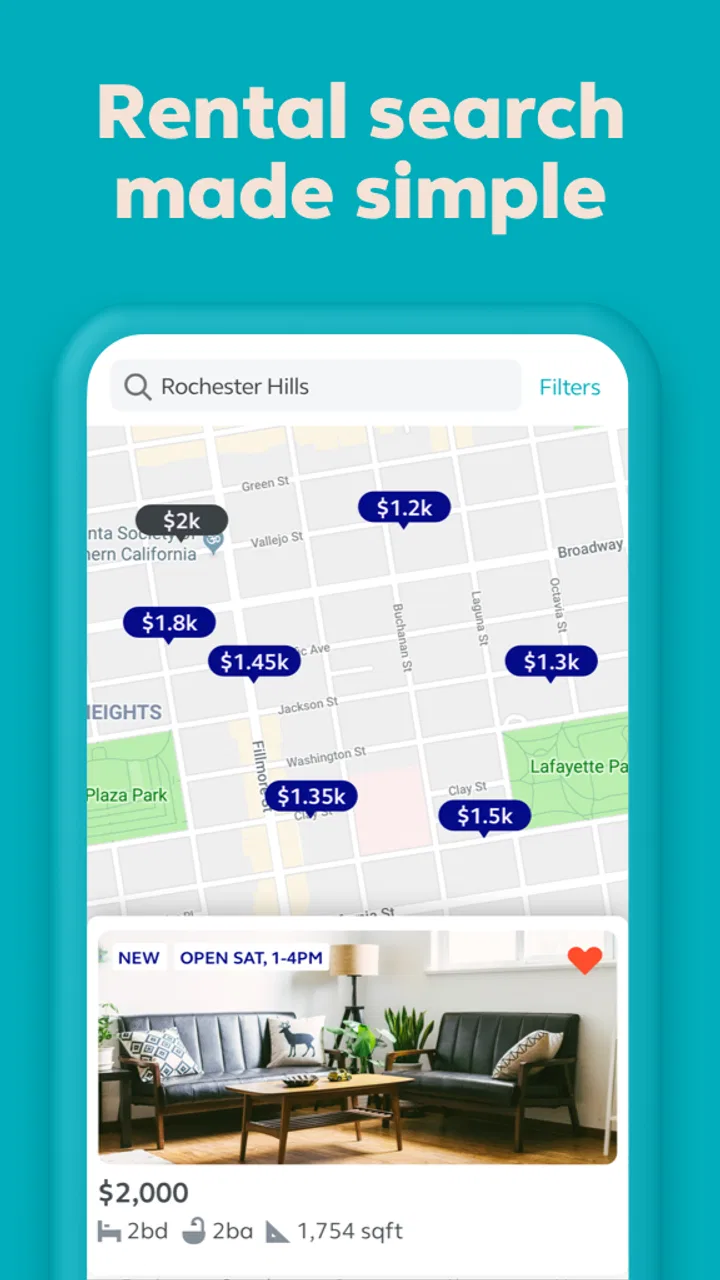
The main strength is the way the app turns a vague housing search into a visual shortlist. Instead of relying only on a long list of addresses, I can move between locations and listings, using the surrounding area as part of the decision. That is especially useful when I am flexible about the exact street but not flexible about access to work, study, family, or services.
I also like the distinction between the broad search and the individual listing. The search helps me understand the market; the listing helps me judge whether a particular option deserves time. Keeping those two purposes separate prevents a common mistake: becoming attached to the first attractive home before checking whether comparable choices exist nearby.
There is a trade-off, though. A rental app can make browsing feel more productive than it really is. Scrolling through homes is easy, while confirming availability, arranging a viewing, and understanding the full cost takes more effort. I recommend setting a stopping rule for each session, such as selecting a small group of serious candidates and writing down the questions they raise. Without that habit, the app can become an endless stream of attractive but impractical listings.
Settings and filters I would check before trusting the results
I do not apply every filter immediately. Instead, I separate essential requirements from preferences. An essential requirement might be the maximum rent or the number of people who need to live there. A preference might be a particular style of kitchen or a slightly larger living room. This distinction keeps the results useful when the local supply is tight.
Location deserves special attention. Searching only by a familiar neighborhood name can exclude places that are close in practice but described differently in listings. I prefer to test the surrounding areas as well, then compare the results rather than assuming the first boundary is the most meaningful one. This is one of the simplest ways to find a better balance between price and convenience.
I also check whether the property type matches my actual plan. Someone looking for privacy should not casually include rooms just because they appear cheaper. Likewise, a renter who needs outdoor space or multiple rooms should not judge an apartment and a house by the same expectations. The app can present these choices together, but I still need to decide what kind of compromise I am willing to make.
For budget planning, I treat the displayed rent as a starting point rather than the complete monthly cost. I write down questions about utilities, deposits, application costs, parking, furnishings, and any other charges that could change the decision. The app helps me locate candidates, but the listing and the eventual conversation with the landlord or agent are where those details must be clarified.
Another useful habit is to revisit the search after changing only one condition at a time. If I increase the acceptable area and lower the bedroom requirement simultaneously, I will not know which change produced the better results. Testing one adjustment at a time gives me a clearer sense of the trade-off. It is slower for a few minutes but saves time when I am comparing several neighborhoods.
Faster patterns for repeat searches
Experienced renters rarely search from scratch every time. I would keep a simple personal checklist beside the app: acceptable rent, minimum space, preferred areas, deal-breakers, and questions for the listing contact. That checklist makes the browsing process more consistent and reduces the temptation to make decisions based only on photos.
I would also divide searches by purpose. One search can focus on the ideal area, another on the maximum affordable area, and a third on room rentals if sharing is a genuine option. This gives me three useful views of the market instead of one overloaded search where every preference competes with every other preference.
When a listing looks promising, I would record why it made the shortlist. For example, it might have a better location but less storage, or more space but a longer commute. Writing down that trade-off is more valuable than simply remembering that I liked the photos. It also makes later comparison easier when several homes begin to look similar.
A practical shortcut is to inspect the least glamorous information first. Before spending time studying decorative details, I look for clues about the layout, location, and suitability for my routine. If a property fails a basic requirement, attractive images should not keep it in consideration. This habit is particularly helpful on a phone, where quick decisions about relevance prevent the search from becoming tiring.
I would use the app at different times of day when possible, not because the listings change in a predictable way, but because my priorities become clearer after thinking about the actual routine. A home that seems ideal during a relaxed evening search may feel less suitable once I consider an early commute, shared living arrangements, or the need to carry groceries from transport.
Where the app helps less than people expect
Trulia Rent is not a complete rental transaction service in my view. It is a discovery tool, and that distinction matters. A listing can be outdated, incomplete, or presented in a way that does not answer the questions most important to me. I would never send money, share sensitive documents, or agree to terms solely because a property appeared in the app. I would verify the person, the property, and the agreement through appropriate real-world steps.
The app also cannot remove the basic uncertainty of a competitive rental market. A good-looking home may attract many interested renters, and a promising result may no longer be available when I make contact. That can be frustrating, especially when the search is urgent. The best response is to keep several realistic candidates active instead of building the entire plan around one listing.
Another limitation is that a phone screen encourages quick visual judgments. Photos may not show noise, odors, traffic, building maintenance, or the feel of the surrounding area. Even a detailed listing cannot replace a visit or a conversation with someone who knows the property. I use the app to decide where to investigate, not to decide that a home is perfect before seeing it.
People who need highly specialized housing may also find the broad rental focus less suitable. If the search depends on very specific accessibility requirements, unusual lease conditions, or a narrow professional housing market, a specialist service or direct local contacts may be more effective. I would still use Trulia Rent for general market awareness, but I would not rely on it as the only source.
Compared with searching through scattered classified posts, the app gives me a more organized way to browse homes and locations. Compared with contacting property managers directly, it is faster for discovery but less personal and less complete for confirming details. Compared with asking friends or local groups, it offers broader reach but less trusted context. I see it as complementary to those alternatives rather than a universal replacement.
Who should use it, and who should skip it
I would recommend it to first-time renters who need a clear starting point, people relocating to an unfamiliar area, roommates comparing room and apartment options, and anyone who wants to build a shortlist before making calls. It is also useful for renters who are still learning what their budget can realistically buy because browsing several nearby areas reveals the cost of different compromises.
I would be more cautious about recommending it to someone who already has a direct connection to a suitable landlord and needs only to complete a formal application. In that situation, another browsing app may add little value. I would also suggest a different or additional resource for a renter whose requirements are so specific that ordinary filters cannot express them accurately.
The app is free, which makes experimenting with different search areas less costly than committing to a paid service. Its content rating is Everyone, so it is presented as a general household and rental-search tool rather than an age-restricted product. It was released on September 28, 2011, and the current version is 11.35.0, with support beginning at OS 9. Those details make it approachable for many phone users, although compatibility should still be checked against the device being used.
My verdict after building a repeatable routine
My overall impression is that Trulia Rent Apartments & Homes works best when I use it deliberately: start broad, separate necessities from preferences, compare nearby areas, and turn attractive listings into questions rather than assumptions. Its value is not that it makes renting effortless. Its value is that it gives the early search a useful structure.
The strongest users will combine the app with a repeatable routine. They will avoid over-filtering, keep notes about trade-offs, revisit promising searches, and verify every important detail before moving forward. Those habits make the app more effective without pretending that any rental platform can guarantee accuracy or availability.
I would install it if I were actively looking for an apartment, house, or room and wanted a convenient way to understand my choices. I would not use it as my only source, and I would not confuse a polished listing with a confirmed home. My recommendation is positive for organized browsing, but conditional on doing the real-world checks that the app cannot do for you.
FAQs for Trulia Rent Apartments & Homes
01What is Trulia Rent Apartments & Homes and how does it work?
Trulia Rent Apartments & Homes is a real estate app designed to help users find rental properties such as apartments and houses. The app provides a user-friendly platform to search for properties based on location, price, and other preferences. Users can view detailed property listings, including photos, descriptions, and amenities, making it easier to find a home that meets their needs.
02Is Trulia Rent Apartments & Homes free to use?
Yes, the Trulia Rent Apartments & Homes app is free to download and use. Users can browse property listings, view photos, and access various features without any charges. However, some features or services, such as premium listings or additional support, might come at a cost. Always check the app for any updates regarding pricing.
03Can I save my favorite listings on Trulia Rent Apartments & Homes?
Absolutely! Trulia Rent Apartments & Homes allows users to save their favorite listings for easy access later. By creating a free account, users can bookmark properties they are interested in and receive notifications about updates or changes to those listings. This feature is especially helpful for keeping track of potential rental options.
04How accurate are the property listings on Trulia Rent Apartments & Homes?
Trulia strives to provide accurate and up-to-date information by regularly updating its property listings. However, since the data is sourced from property managers and landlords, discrepancies can occasionally occur. It's recommended to contact the listing agent or property manager directly for the most current information and to verify details.
05Does Trulia Rent Apartments & Homes offer any additional features to assist in the rental search process?
Yes, Trulia Rent Apartments & Homes offers several additional features to enhance the rental search. These include neighborhood guides, crime maps, school ratings, and commute estimations. These tools help users make informed decisions by providing insights into the surrounding area, ensuring they choose a location that suits their lifestyle and needs.
Pros
- User-friendly interface
- easy to navigate.
- Comprehensive neighborhood insights.
- Customizable search filters for precision.
- Real-time alerts for new listings.
- Detailed property descriptions and photos.
Cons
- Limited international listings.
- Occasional app crashes reported.
- Ads can be intrusive to some users.
- Some information may be outdated.
- Requires internet for full functionality.

Trulia Rent Apartments & Homes
Gallery